
The Cars That Outlived Their Paperwork, And Why Opel Tuners Keeps Writing It Down
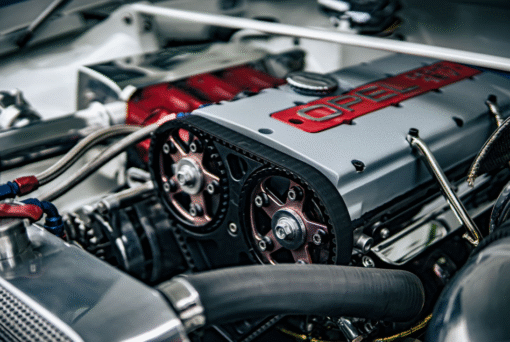
The car almost always arrives before the knowledge does.
Someone buys a 1974 Manta out of a barn in Ohio. Someone else drags home an Ascona B that spent nineteen winters under a tarp. The metal is there, the engine turns over, and then the new owner sits down to work out what the rear suspension geometry is supposed to be at ride height, and finds that the answer is not written down anywhere they can actually reach.
This is the quiet problem in old-car ownership, and it has very little to do with parts. Parts can be fabricated, adapted, or borrowed from something else. What cannot be fabricated is the accumulated knowledge of how a particular platform behaves when you change one thing on it. That knowledge used to live in dealer service networks, in factory bulletins, and in the heads of men who did the work every day for thirty years. The dealer networks are gone. The bulletins were never digitized. The men have mostly retired.
What is left is scattered, and it is decaying faster than the cars are. A brake caliper interchange that somebody worked out properly in 2003 sits in a forum thread whose image host went dark years ago, so the post now reads as a paragraph of context followed by nine broken rectangles. A Finnish page with the correct injection wiring returns a 404. A German club board that held the best writing on torque-tube driveline angles quietly changed platforms and took its archive with it. Every one of those losses costs the next builder a weekend, or a bent flange, or a car that never quite drives right and gets sold on as a mystery.
The unglamorous fix is somebody writing it down
Opel Tuners is one answer to this, and it is deliberately not the answer people expect. It is not a workshop. It does not sell parts. It describes itself as an independent technical reference publisher for the Opel and rear-wheel-drive Opel-platform community, which is a plain way of saying that its entire product is written procedure.
The archive covers four platforms, the Ascona, Manta, Monza and GT, and it sorts everything into three areas: fuel injection and engine management, suspension, brakes and chassis geometry, and drivetrain and gearing. Entries cross-link, so a brake upgrade page will point you at the master-cylinder matching question rather than pretending it does not exist.
What makes it worth reading is a bias that runs through the whole thing. Most enthusiast writing is a shopping list. Buy this manifold, buy that pump, bolt it on. The reference material here is closer to a sequence, and it is fairly blunt about the fact that sequence is where builds die.
The material on carb-to-injection conversions for CIH engines is a good example. It is built around one documented Bosch L-Jetronic conversion rather than a general survey, and the order it insists on is fuel system first, pressure tested and verified, before anyone touches the electronics. Then idle stabilized. Then part-throttle sorted. Only then does timing get advanced. The failures it warns about are not exotic. They are fuel system shortcuts and harness merges taken from the wrong donor car, which is to say they are the two things a person in a hurry does on a Saturday afternoon.
The torque-tube and gearbox reference works the same way. Before anything is cut, you document baseline angles and link lengths at ride height. Flange integrity gets verified after the modification, not assumed. The gearbox goes in with the tunnel and shifter mocked up. Pinion angle gets set and rear thrust aligned. And then, before any power increase at all, the car gets road tested. Nothing in that list is clever. All of it is the difference between a driveline that lasts and one that vibrates for the rest of its life.
Free to read, on purpose
There is a structural decision behind the archive that is easy to miss. The reference articles are free. All of them, with no gate. The site runs optional Supporter and Patron memberships at nine and nineteen dollars a month, and what those pay for is restoration of old pages and production of new ones, not access to what already exists.
That choice is the right one for a specific reason. A paywalled archive of platform knowledge is only marginally better than a dead forum, because the person who needs it most is usually the person who has just spent everything they had on the car. Keeping it open is what makes it function as reference rather than as a product.
None of this will ever be the interesting part of the hobby. Nobody photographs a well-sequenced fuel system. The pictures that circulate are of finished cars in good light, and the work that made them possible looks like a page of measurements taken at ride height by somebody kneeling on cold concrete with a notebook.
But that notebook is the whole thing. A platform survives exactly as long as the last accurate description of how it works, and for a set of cars the factory stopped caring about decades ago, that description now lives in places like this one because a few builders decided to type it out. Cars get restored. Knowledge only gets written down, or lost.